Infrastructure and fit-out
Warehouse racking systems
Warehouse racking is the structural frame your stock sits on, and the choice you make about it fixes how much you can store, how quickly you can pick and how safely the building runs for the next fifteen years. Rejuva designs, supplies, installs, inspects, repairs and relocates racking across Europe, from a single run of pallet racking to a fully automated high-bay store, and runs the whole project through one point of contact.

What warehouse racking is, and what decides the type you need
Warehouse racking is a system of upright frames and horizontal beams that holds palletised or hand-loaded goods off the floor and stacks them towards the roof. It turns the empty height of a building into usable storage, and it sets the geometry every other decision has to follow: aisle widths, truck choice, lighting positions, sprinkler layout and traffic routes all follow the racking rather than the other way round.
Which system suits you comes down to four things: what you store, how many separate lines you hold, how quickly stock turns over, and what your handling equipment can reach. A chilled food operation holding forty fast-moving lines needs a very different frame from a steel stockholder storing bar and tube.
Getting it wrong is expensive twice: once when the steel is bought, and again every day the layout forces the operation into extra travel, double-handling and avoidable damage. That is why a survey comes first and the product recommendation follows from it, not the reverse.
Racking services, from first survey to buy-back
Racking is not only bought. It has to be installed to the design, inspected while it is in use, repaired when it is hit, and moved or sold when the operation changes. Rejuva covers the whole life of the system.
-
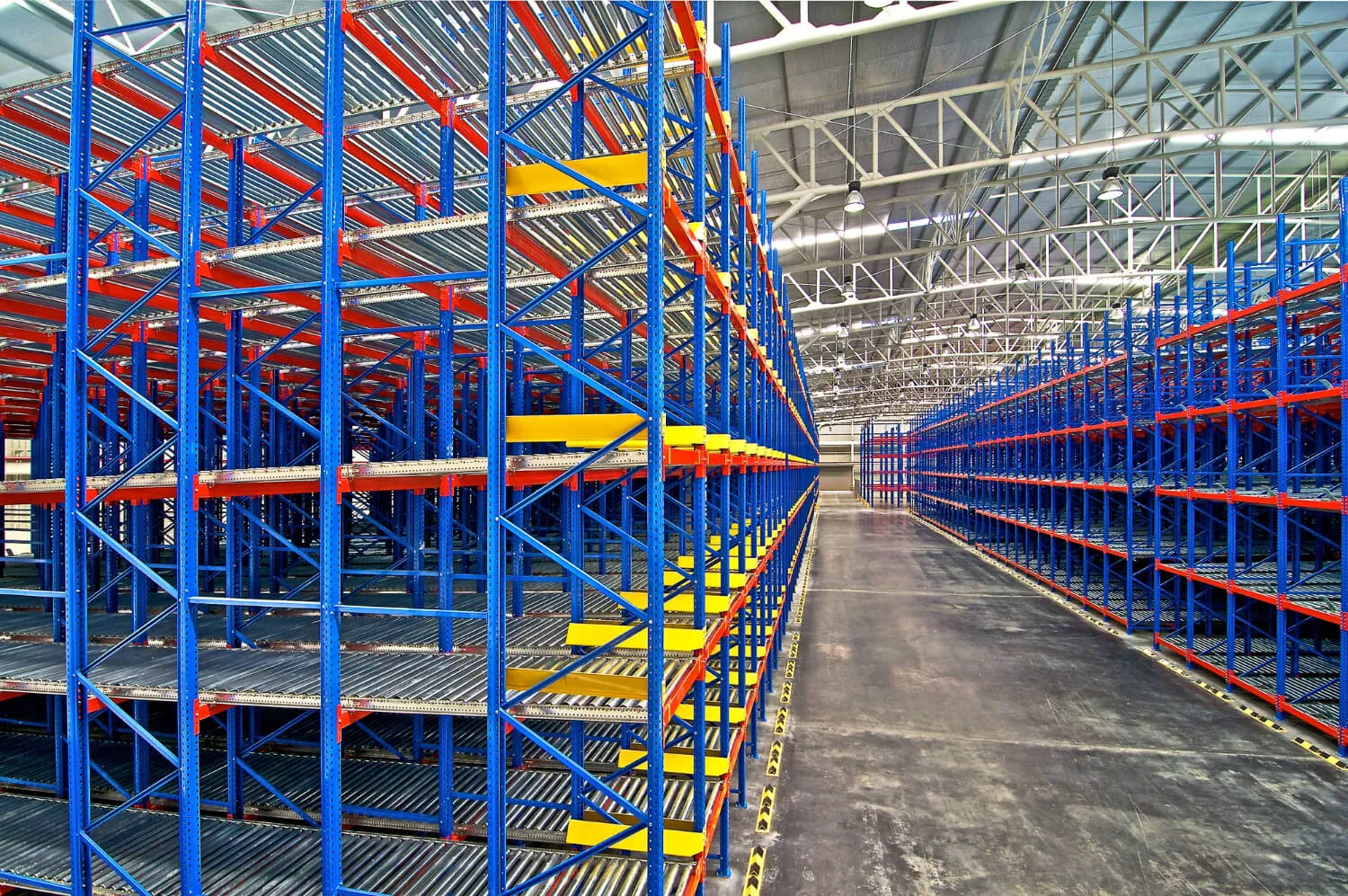
Racking installation
Installed to the approved drawings by crews who do this full time, and sequenced so the parts of the warehouse that are still trading keep trading.
-

Racking inspection
Expert inspection against EN 15635, with damage classified by risk and a written report you can act on and show to a regulator or an insurer.
-
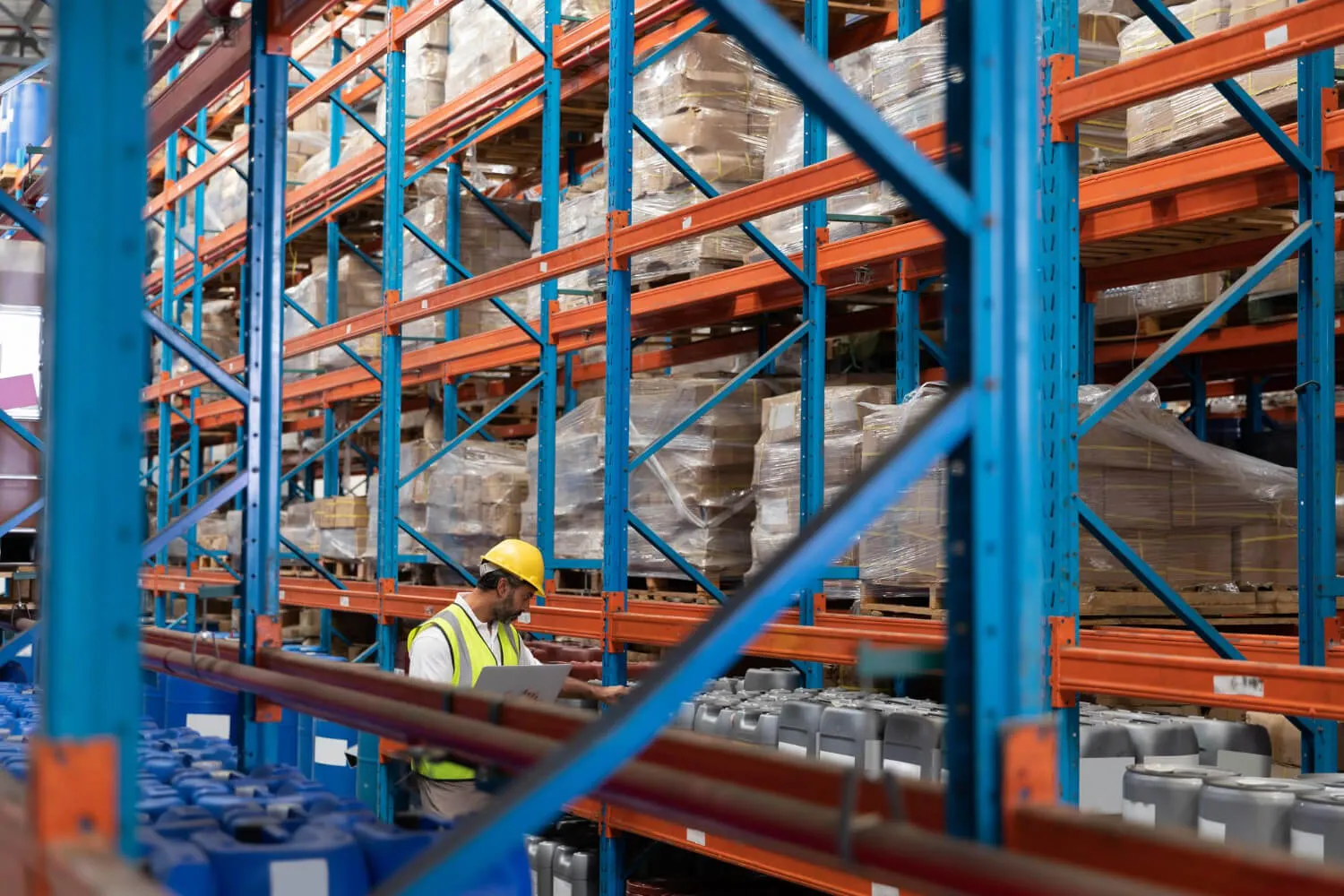
Racking maintenance
A planned programme that catches wear, loose fixings and creeping impact damage while it is still a small job rather than an unload and rebuild.
-
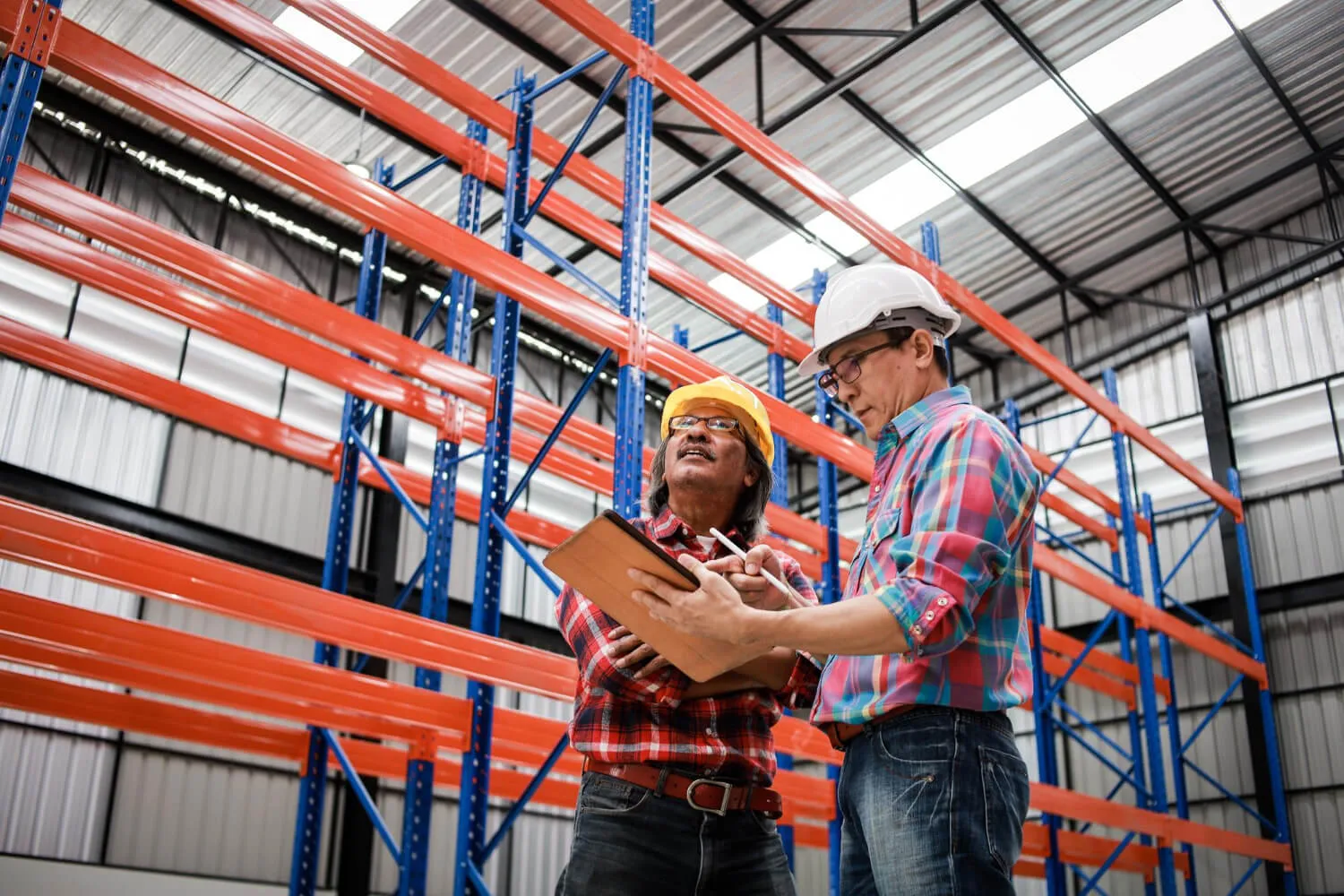
Racking repair
Damaged uprights, braces and beams replaced or repaired to the manufacturer's specification, rather than patched, straightened or left in service.
-
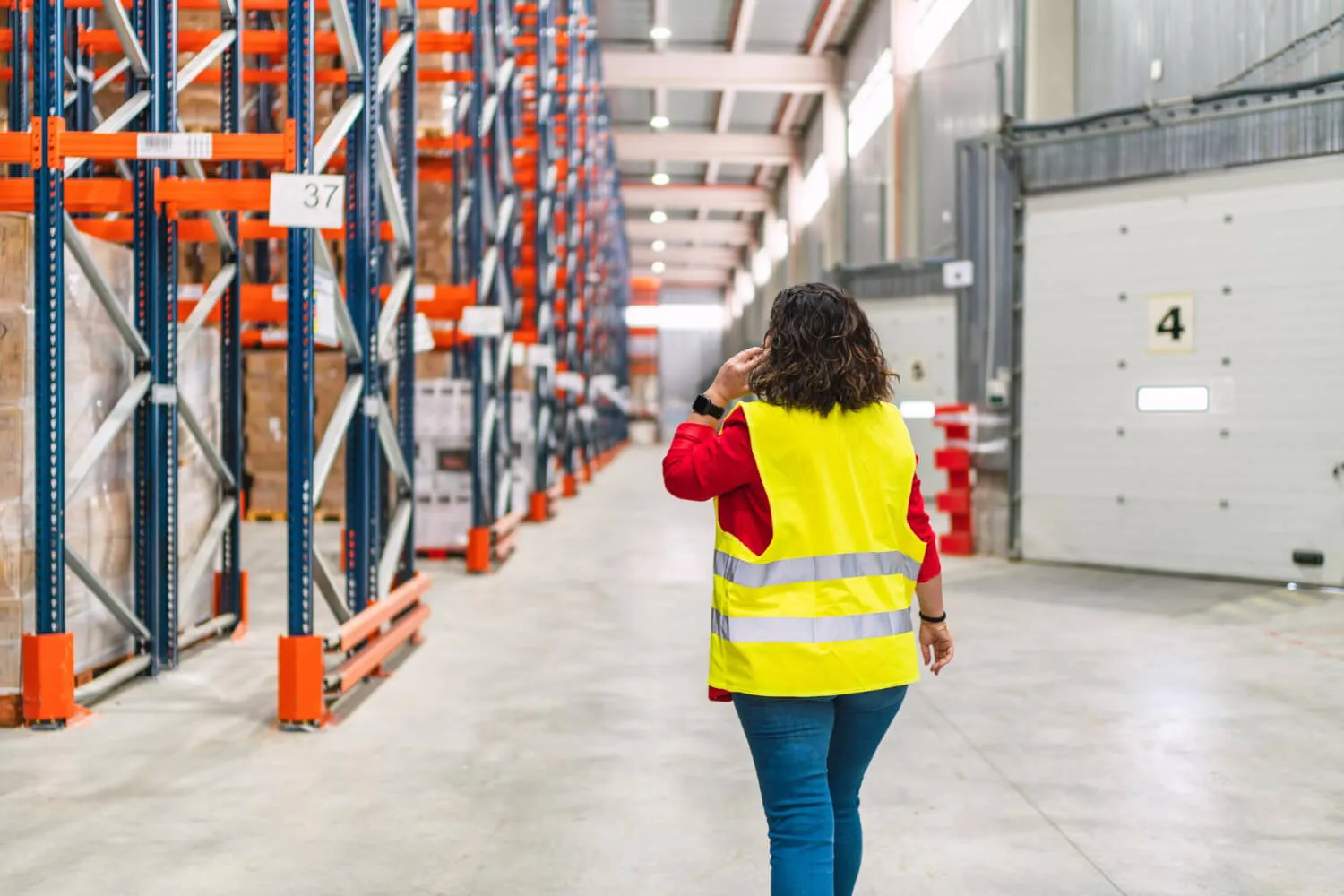
Racking hire
Racking on hire for seasonal peaks, overflow and temporary sites, so a short-term storage problem does not have to become a capital purchase.
-
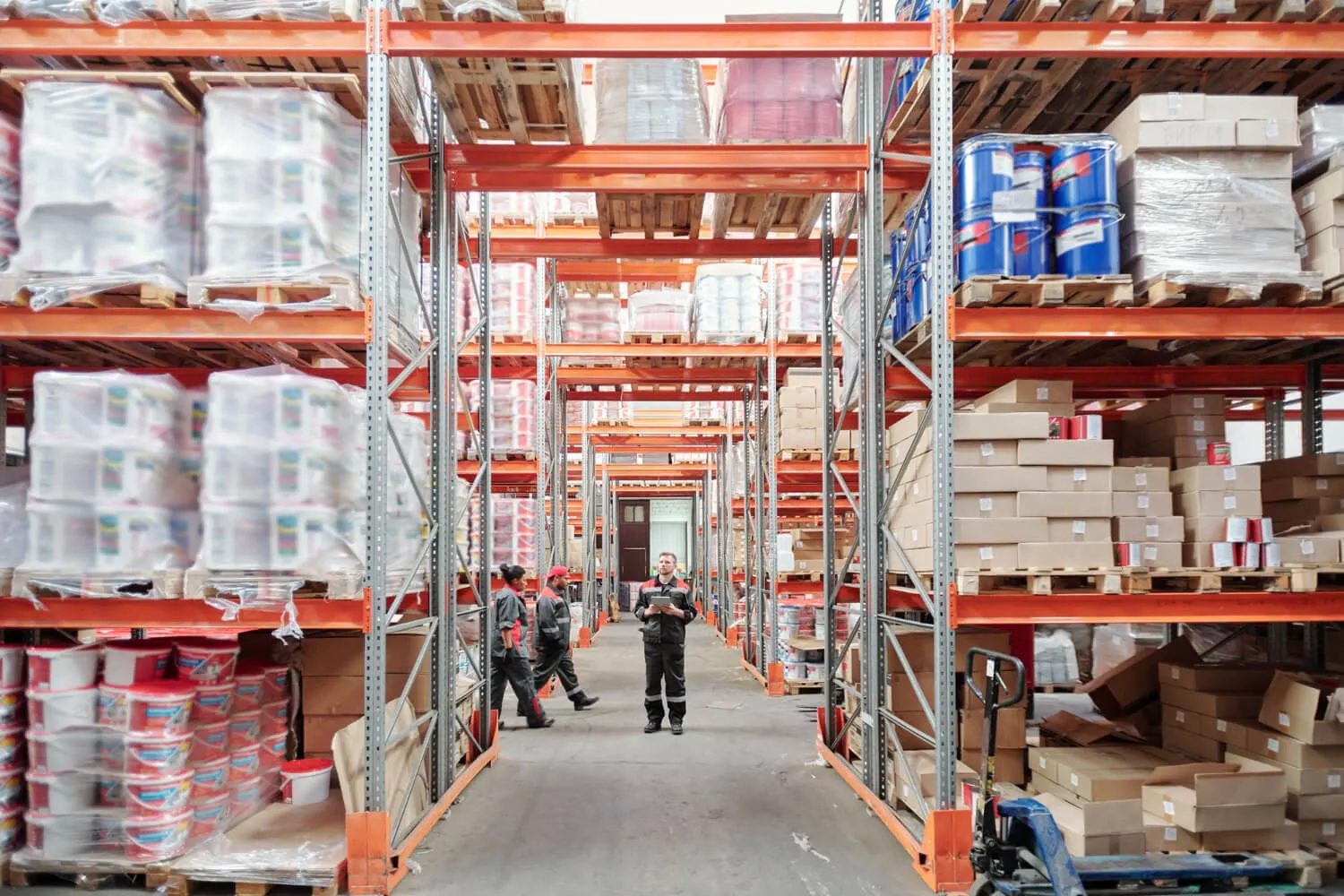
Racking relocation
Dismantling, transport, re-survey and re-installation when you move site or reconfigure, including checking that the frame is still fit to re-erect before it goes back up.
-

Racking buy-back
We buy back racking you no longer need and can supply quality second-hand systems, which keeps serviceable steel in use and keeps the cost of a reconfiguration down.


Racking systems we design and install
Every system below sits somewhere on one trade-off: selectivity, meaning you can reach any pallet at any time, against density, meaning how many pallets fit into the same floor area. Follow any card for how that system works and where it earns its place.
-
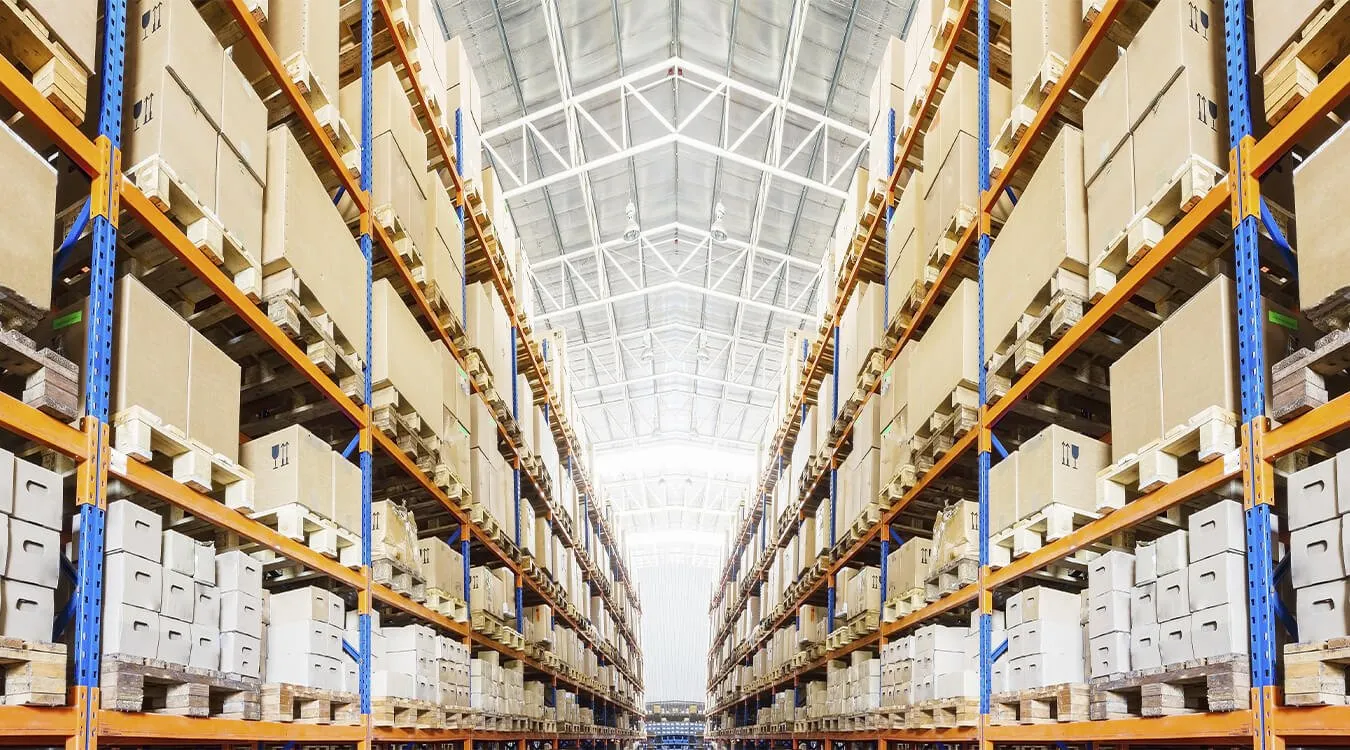
Pallet racking
The reference system. Every pallet is directly accessible from the aisle, so any line can be picked at any moment. The right answer where you hold many lines and turnover matters more than fitting in the last pallet.
-
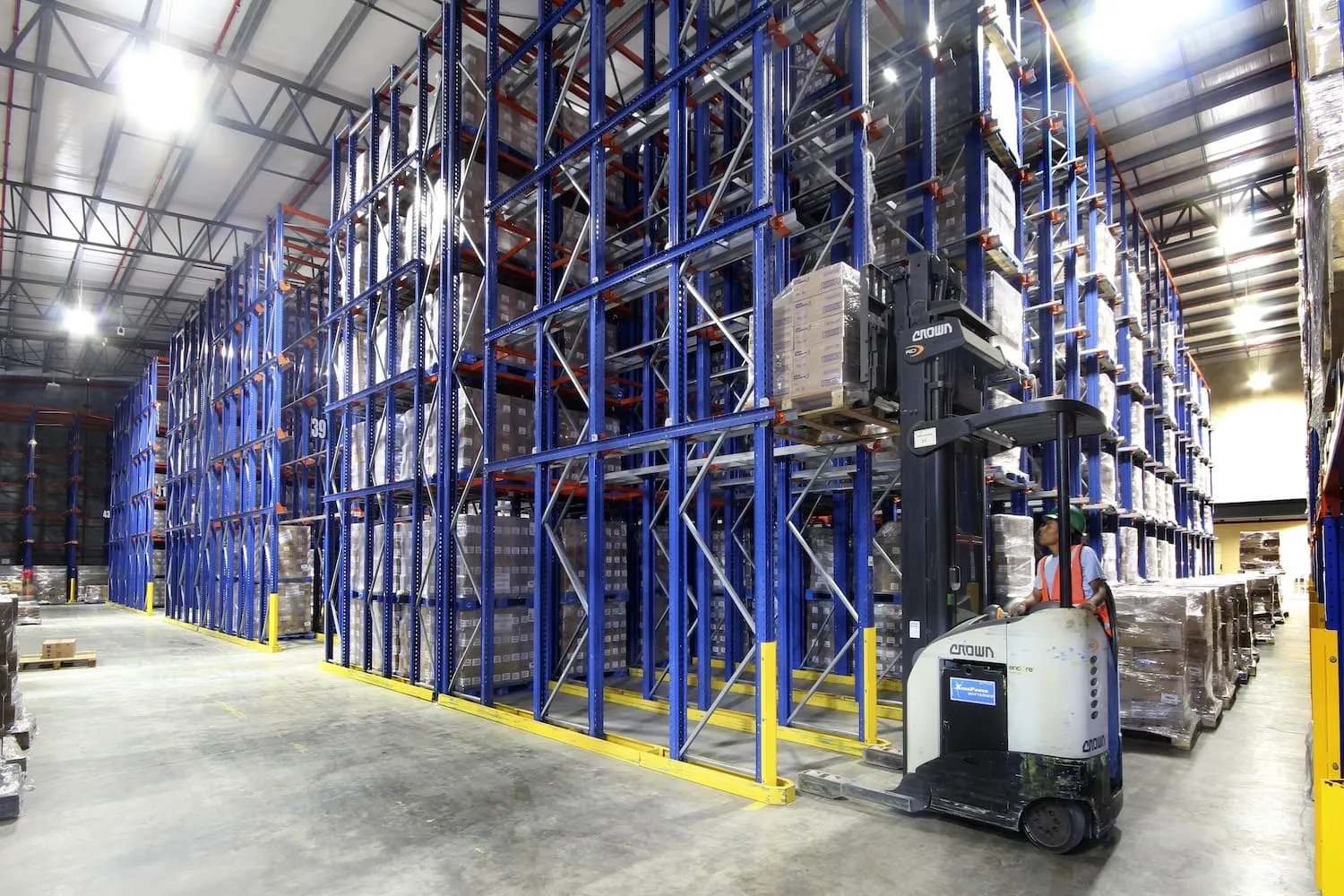
Drive-in racking
Trucks drive into the lane and place pallets several deep on supporting rails, which removes most of the aisles. Suits a few lines held in volume, and works on a last in, first out basis.
-
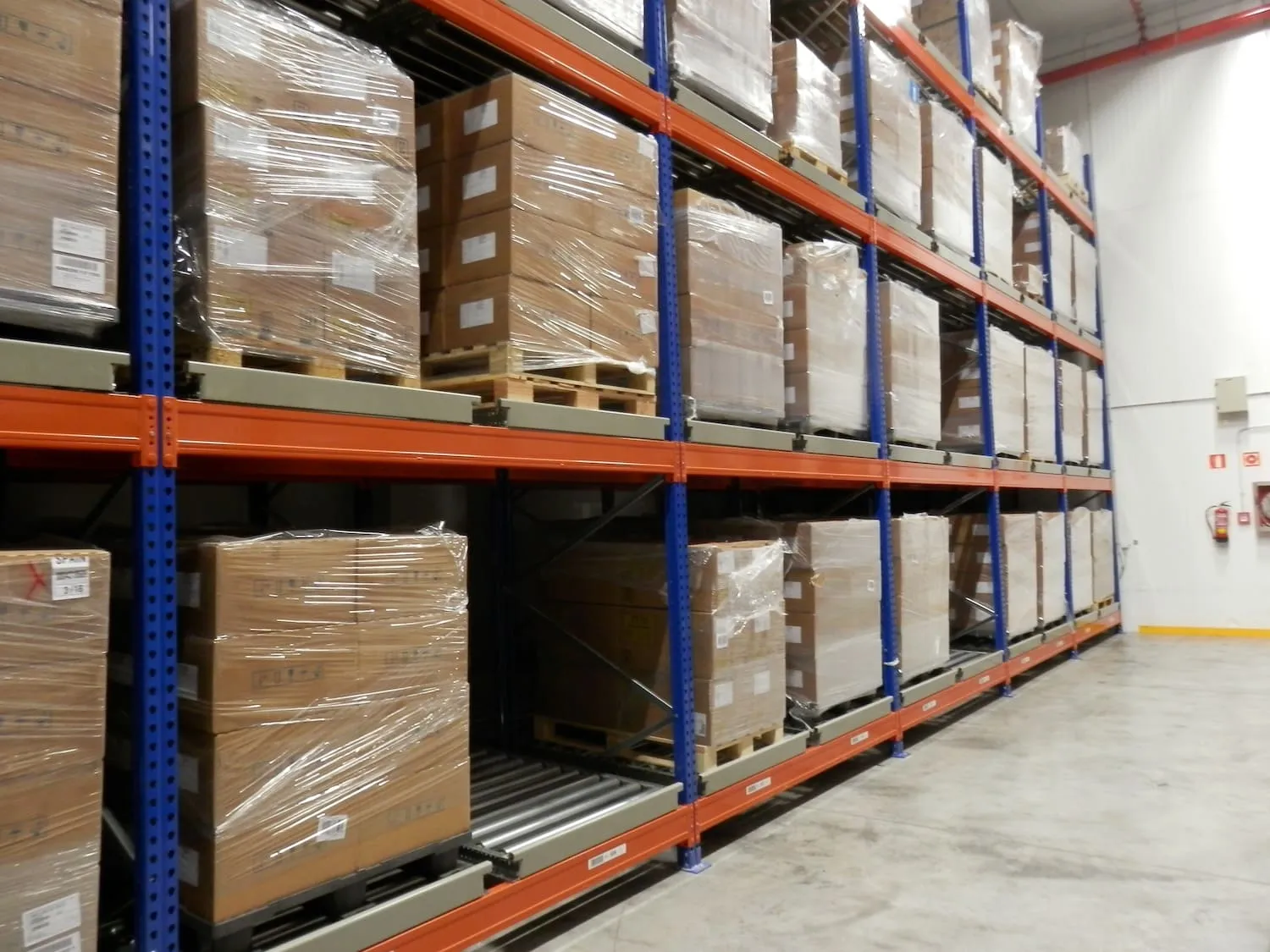
Push-back racking
Pallets sit on wheeled carts that run back along inclined rails, so a lane holds several pallets deep while still being loaded and picked from a single aisle, without the truck ever entering the lane.
-
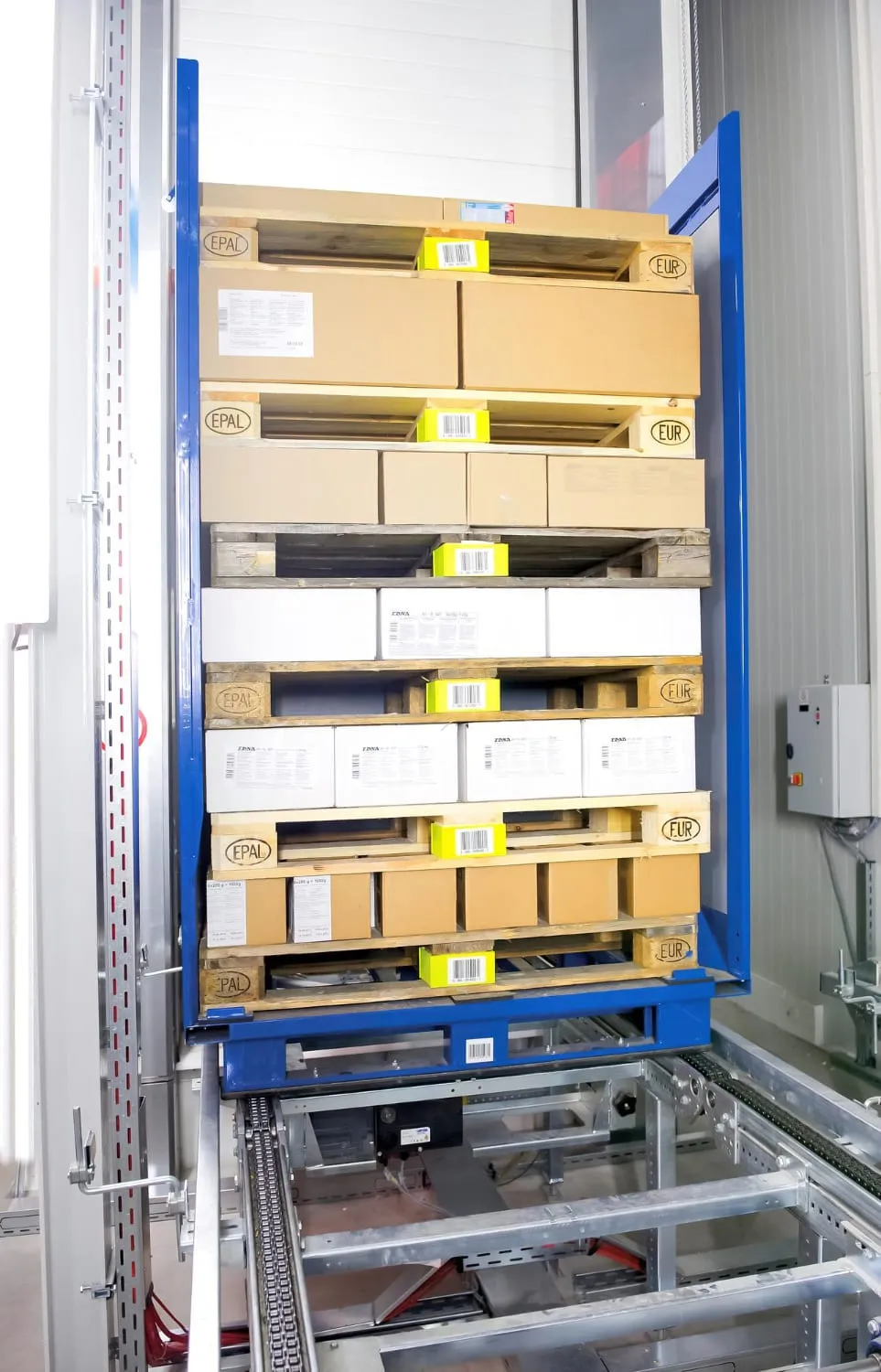
Pallet shuttle racking
A motorised shuttle runs inside the lane and moves the pallets itself, so lanes can be far deeper than a truck could safely enter. For high-volume, few-line storage where drive-in has run out of depth.
-
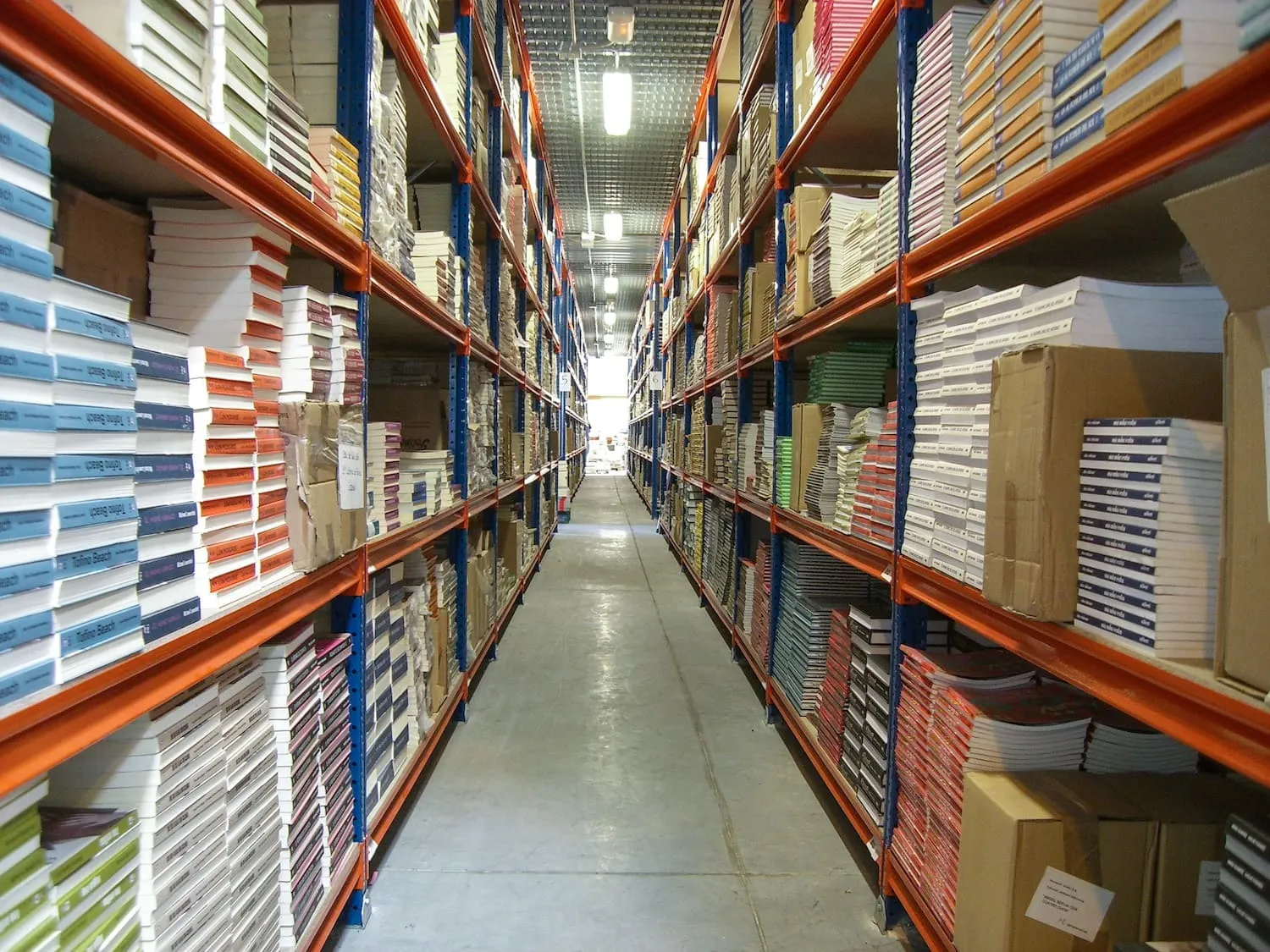
Picking shelving
Hand-loaded shelving for cases and small parts, set at heights an operator reaches without a truck. Usually works alongside pallet racking, serving the pick face while the racking holds the reserve.
-
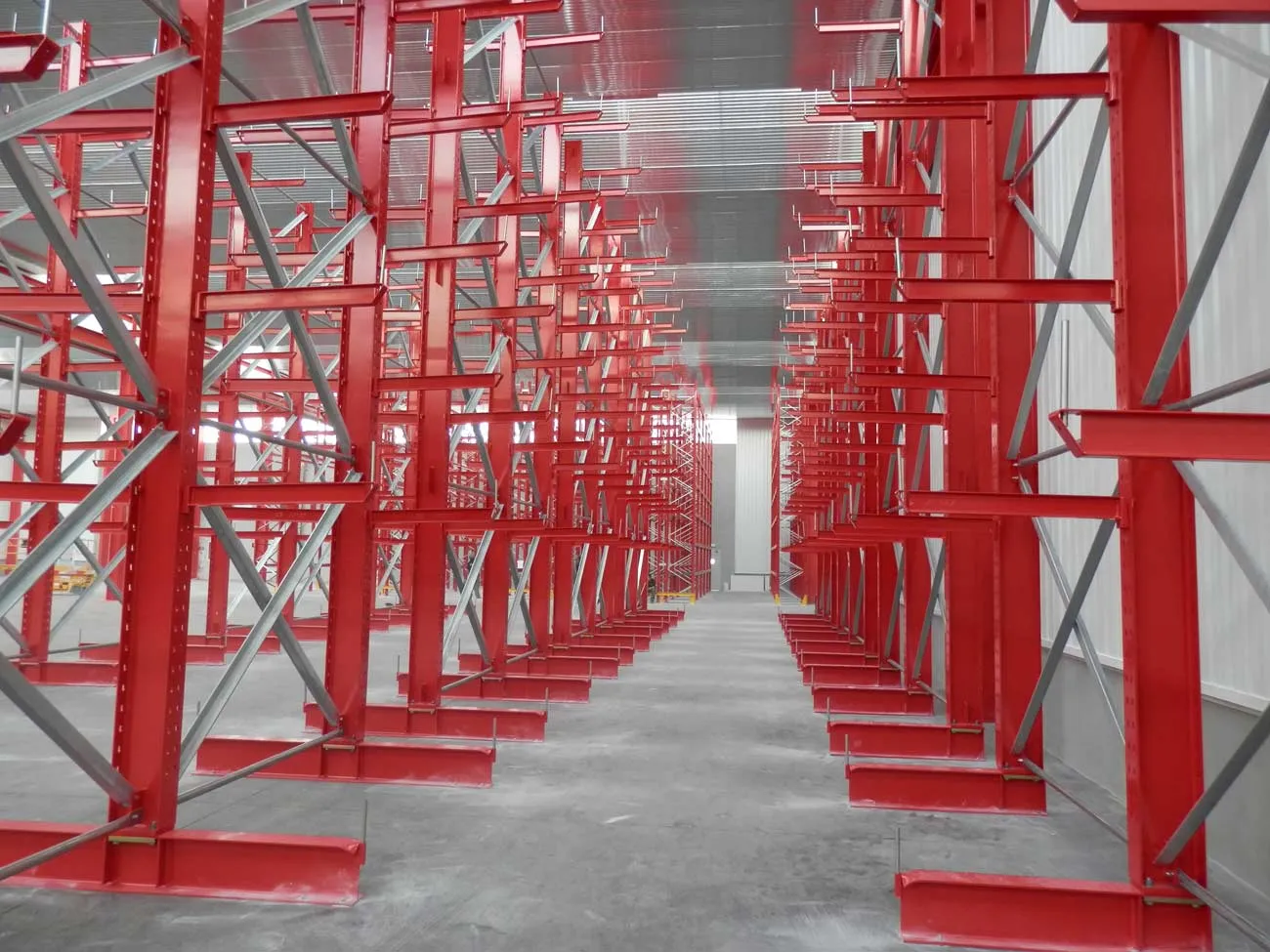
Cantilever racking
Load-bearing arms on a single column, with no front upright in the way, so long or awkward loads such as timber, tube, bar and panels can be loaded from the side along their whole length.
-
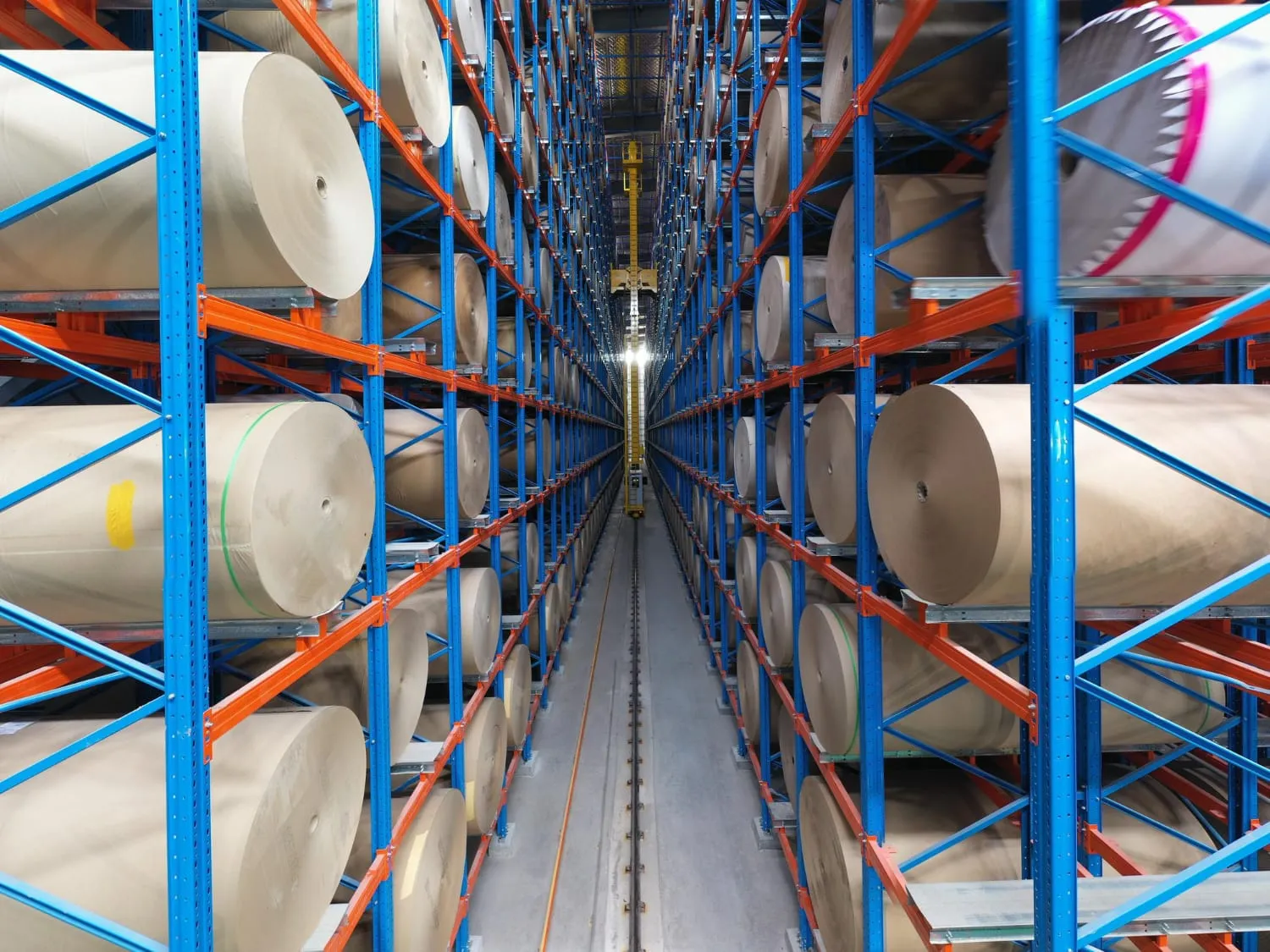
Coil racking
Cradles and saddles shaped for cylindrical loads that would roll or deform on a flat beam. Used by steel stockholders, metal processors and anyone storing coil, drum or reel.
-
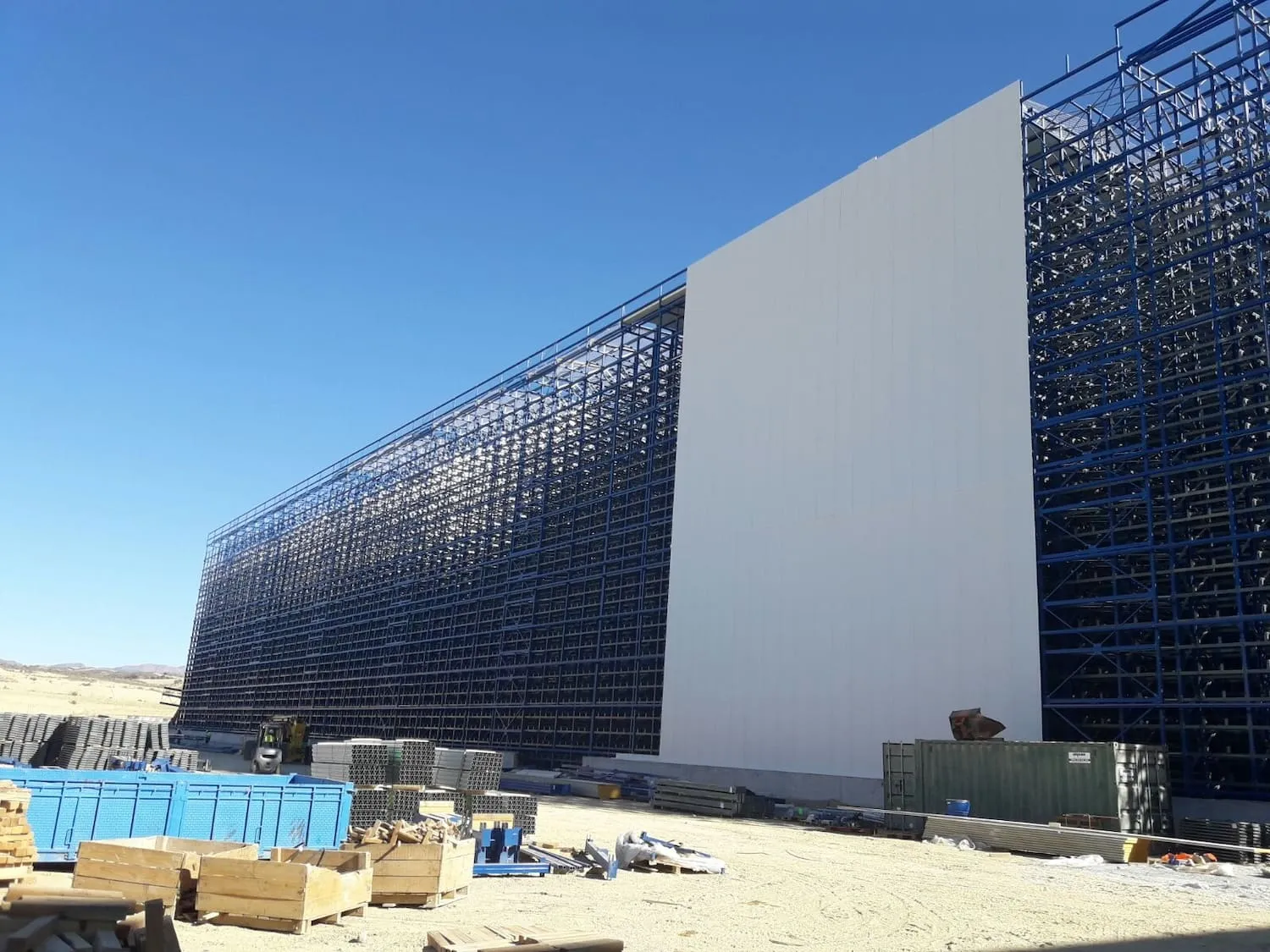
Clad-rack warehouse
The racking carries the roof and the walls, so the storage system is the building's structure. Reaches heights a conventional shed cannot, and is normally the route to a high-bay facility.
-
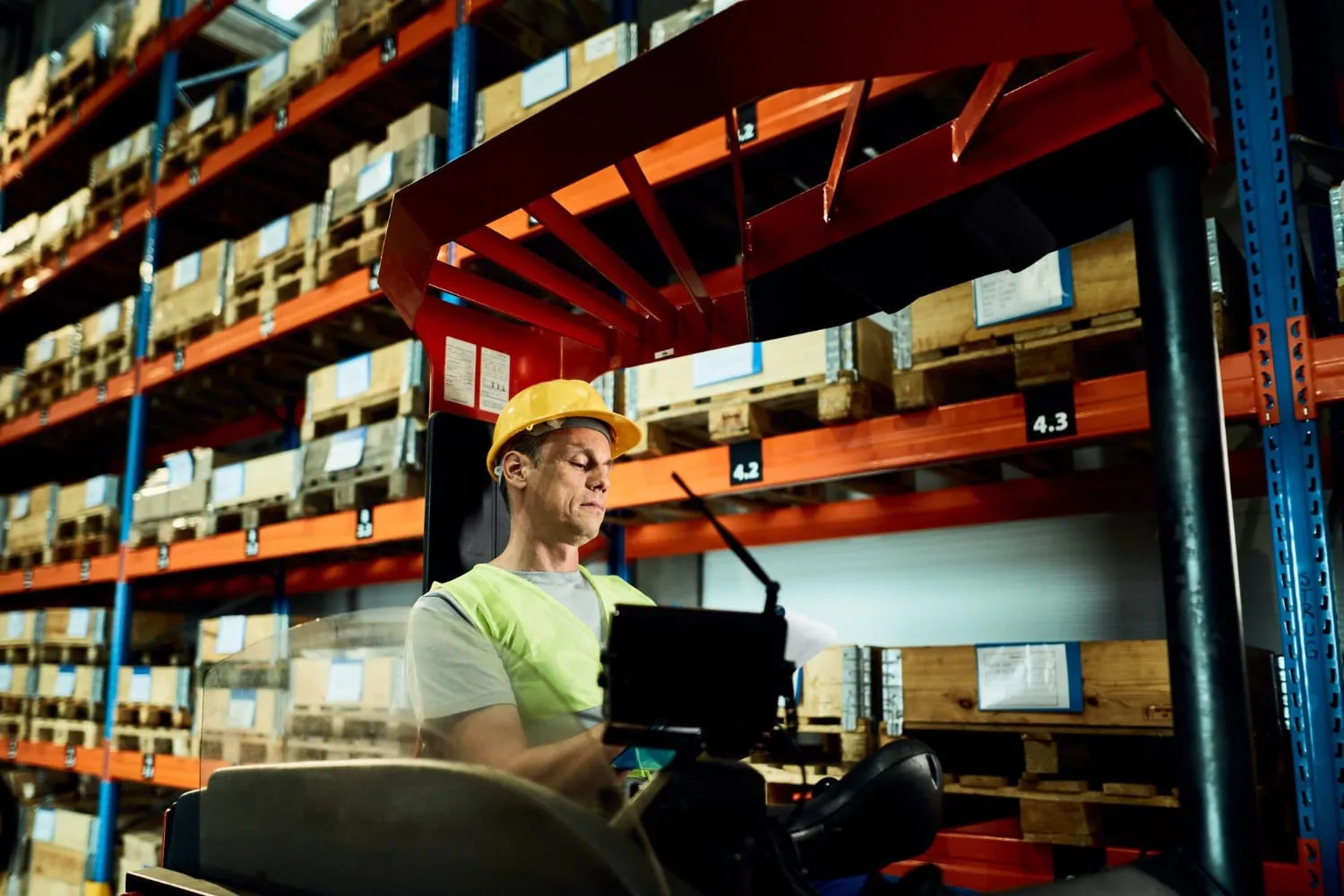
Automated storage and retrieval
Cranes or shuttles handle put-away and retrieval under software control, taking truck travel out of the aisle entirely and allowing layouts that are both very tall and very narrow.
-
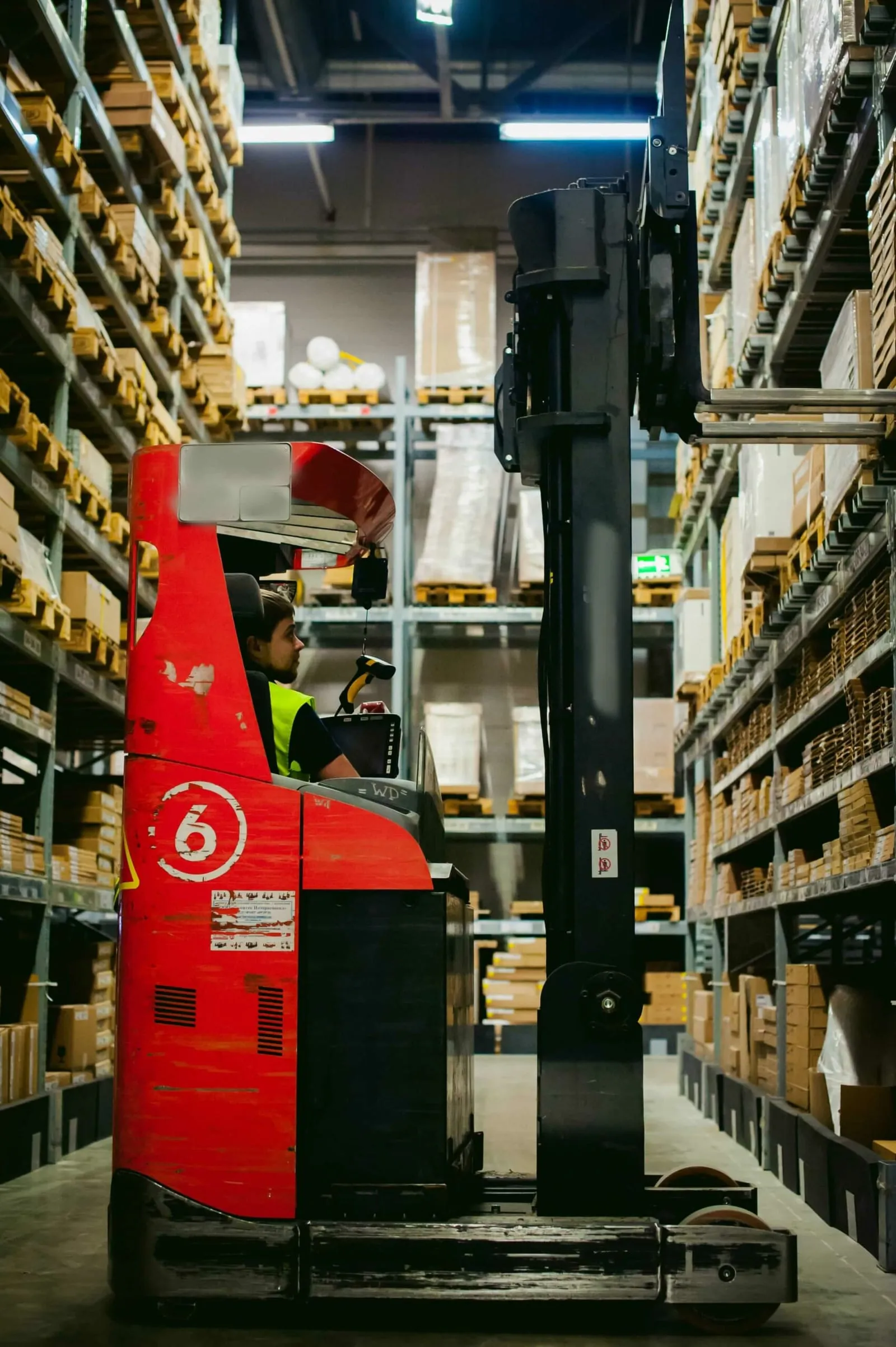
Very narrow aisle racking
Conventional pallet racking with the aisles cut back to the width a guided VNA truck needs, converting floor that used to be aisle into pallet positions inside the same four walls.


Density or selectivity: the trade-off behind every racking decision
Every racking layout is a position on a single line. At one end, wide-aisle pallet racking gives access to every pallet and spends floor on aisles to do it. At the other, drive-in, shuttle and automated systems fill the floor and give up some of that direct access. Nothing is free in either direction.
Where you should sit depends on the ratio between lines and pallets. Many lines with few pallets each pushes you towards selectivity. Few lines with many pallets each pushes you towards density. Most real warehouses need both, in different zones of the same building.
- Many lines, picked often: pallet racking, or very narrow aisle where floor is tight.
- Few lines in volume, last in first out acceptable: drive-in or push-back.
- Few lines in volume, but throughput matters too: pallet shuttle.
- Long, heavy or cylindrical loads: cantilever or coil racking.
- Out of height rather than out of floor: clad-rack or automated storage.
A survey settles this properly, because it measures your actual line count, your pallet profile and what your trucks can genuinely reach.
How a racking project runs
-
Survey and brief
We measure the building, look at your stock profile and pick rates, and agree what the racking actually has to achieve.
-
Design and proposal
You get a layout, a system recommendation and one budget covering supply, installation and the other trades the change pulls in.
-
Installation
One project manager runs the site, with the work sequenced around your operation so storage and despatch keep running.
-
Handover and inspection regime
You get the load notices, the drawings and the inspection schedule the system has to run on, in place from the first day it is loaded.
Why bring Rejuva in
A racking project rarely stays a racking project. It usually pulls in the floor, the line marking, the lighting and the impact protection, and that is where the coordination cost appears.
-
One point of contact
One contract, one budget and one project manager, even when the job runs across several trades or several countries.
-
Specialists, not generalists
The crews are firms that install racking full time, chosen for your system rather than whoever happened to be free that week.
-
Not tied to one manufacturer
We work through a network of suppliers, so the recommendation follows the survey rather than a single maker's catalogue.
-
The work around the racking too
New aisle positions mean new line marking, relocated lights and protection where the traffic pattern changed. That comes in the same project.
Racking safety, inspection and compliance
Racking is work equipment, and once it is in use the duty to keep it safe sits with whoever operates the warehouse rather than with whoever sold the steel. In the UK that duty arrives through the Provision and Use of Work Equipment Regulations. Across Europe the technical reference is EN 15635, the standard covering the use and maintenance of storage equipment.
EN 15635 asks for two separate things. Someone on site, the person appointed as responsible for storage equipment safety, carries out regular visual checks and keeps a damage log. Separately, a technically competent inspector carries out an expert inspection at intervals not exceeding twelve months and reports in writing.
Damage is then classified by risk rather than by how bad it looks, which is why a component that seems survivable can still require a bay to be emptied the same day.
- Green: damage is within tolerance. Record it and watch it at the next check.
- Amber: repair is required. The location is offloaded as it empties and is not reloaded until the component has been replaced.
- Red: unload immediately and isolate the bay until the component has been replaced.
We arrange the inspection and carry out the repairs the report calls for, which keeps the finding and the fix with the same supplier instead of leaving you to broker between two.
Where we work
Rejuva delivers racking projects across Europe. In the UK that covers the logistics corridors where most warehousing sits, including the Midlands, the North West, Yorkshire, the South East and the East of England, and the work is planned around the region's access hours and site rules rather than around a single fixed schedule.
If you run sites in more than one country, the same contract and the same project manager cover all of them. That is usually the reason clients come to us rather than to a local installer.
Warehouse racking by region
Where the work happens, region by region, with the counties and cities each one covers.
-
East Midlands
Derbyshire, Leicestershire, Lincolnshire, Northamptonshire and Nottinghamshire, along the M1 and the A14.
-
East of England
Cambridgeshire, Essex, Norfolk, Suffolk and Bedfordshire, from Cambridge to Colchester and the Stansted corridor.
-
Greater London
Park Royal, Enfield, Croydon, Barking Riverside and the Heathrow and Thames Gateway corridors.
-
North East
Tyne and Wear, County Durham, Northumberland and Teesside, from the Port of Tyne to Tees Valley.
-
North West
Greater Manchester, Cheshire, Merseyside and Lancashire, including Trafford Park and the Warrington belt.
-
South East England
Hampshire, the Thames Valley, Kent and Sussex, from Slough and Milton Keynes to Southampton and Portsmouth.
-
South West
Somerset, Gloucestershire, Devon and Cornwall, from Avonmouth and Swindon to Exeter and Plymouth.
-
West Midlands
Birmingham, Coventry, Wolverhampton, Warwickshire and the Black Country, along the M6 corridor.
-
Yorkshire and the Humber
South, West and East Yorkshire and the Humber ports, from Leeds and Sheffield to Hull and Goole.
FAQs
Frequently asked questions about warehouse racking
How often should warehouse racking be inspected?
EN 15635 calls for an expert inspection by a technically competent inspector at intervals not exceeding twelve months. On top of that, the person appointed as responsible for storage equipment safety should carry out regular visual checks in-house and keep a written damage log between those annual inspections.
Who is allowed to inspect warehouse racking?
The annual expert inspection has to be done by someone technically competent and independent of the day-to-day running of the warehouse. In the UK that is commonly a SEMA approved rack inspector. The routine visual checks in between are done in-house by the appointed person responsible for storage equipment safety.
What is the difference between pallet racking and drive-in racking?
Pallet racking gives direct access to every pallet from the aisle, so any line can be picked at any time, but it spends floor area on aisles. Drive-in racking removes most of those aisles and lets the truck enter the lane to stack pallets several deep, which fits far more in the same footprint but works last in, first out. Pallet racking suits many lines; drive-in suits a few lines held in volume.
How much does warehouse racking cost?
It depends on the system, the height, the load per pallet, the number of bays and what the floor and the building will take, so a price per bay quoted before a survey is not worth much. We survey the building, then quote for the layout you actually need.
Can existing racking be modified or reconfigured?
Usually, yes. Beam levels can be reset for a new pallet profile, runs can be extended or shortened, and aisles can be narrowed if the trucks allow it. What matters is that the reconfiguration is designed rather than improvised, because moving beam levels changes the load the uprights carry and the frame has to be re-rated and re-labelled.
Do you supply second-hand racking?
Yes. We run a buy-back programme for racking you no longer need and can supply quality second-hand systems. Second-hand steel has to be matched by manufacturer and profile and inspected before it goes back up, since mixing components between makers is one of the more common causes of a failed inspection.
Do you provide emergency racking repairs?
Yes. Impact damage classified as an immediate risk needs the bay offloaded and isolated straight away, so we treat those as urgent and get a repair crew to site rather than putting it into a routine maintenance round.
What type of racking is best for my operation?
There is no single best system, only the one that matches your stock. As a rule of thumb: many lines picked often points to pallet racking, or very narrow aisle if the floor is tight; few lines held in volume points to drive-in, push-back or pallet shuttle; long or cylindrical loads point to cantilever or coil racking; and running out of height rather than floor points to clad-rack or automated storage. A survey of your lines, pallet profile and pick rates settles it.
Related services
Projects rarely stop at one discipline. These are the services most often planned alongside this one.

Have a project in mind?
Describe what needs to happen in the building and we will come back with a proposed approach, the specialist who would carry it out and a budget you can work with.