Safety and compliance
Industrial protections
Forklift impacts, reversing vehicles and accidental damage cost warehouses and factories in repairs, in downtime and occasionally in injuries. Rejuva supplies and installs protection systems that take the impact instead of the racking upright, the column or the person standing next to it.

Why industrial protections matter
In a busy building, accidents are a matter of frequency rather than possibility. A forklift clips a racking upright, a delivery vehicle reverses into the dock, a pallet truck catches a column. Without protection each of those becomes structural damage, a repair, an interruption, and sometimes an injury.
Protections exist to absorb that impact and stop the consequence. They keep the damage in a component designed to be replaced, which is the whole idea: a bollard is cheap and a rack upright holding forty pallets is not.
Installing the right ones is not only a compliance exercise. It reduces what you spend on repairs, keeps the operation running and makes the building safer to work in, which is the part nobody puts on an invoice.
The range
Six products, each covering one kind of impact. Most sites need three or four of them rather than all six, and which ones follows from where the marks on the floor and the dents in the steel already are.
-
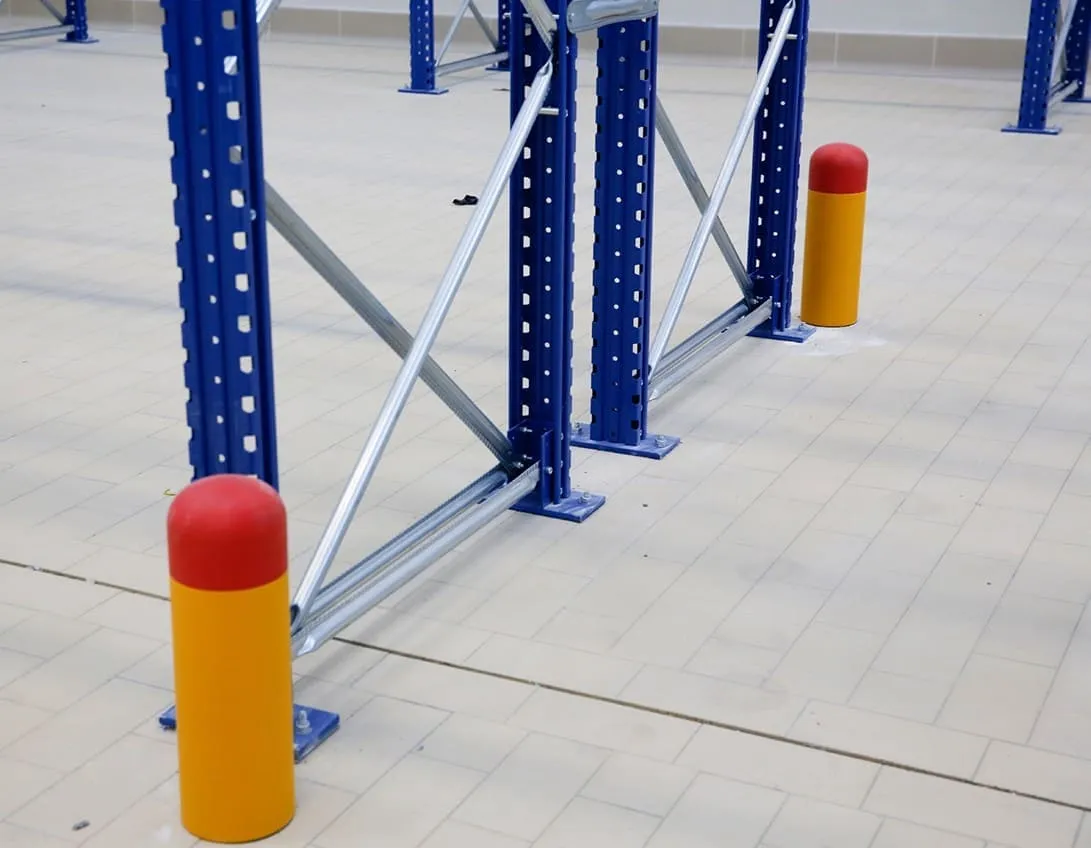
Rack protection
Racking uprights hold the whole system up, and they are at exactly the height a forklift hits. Rack protection shields those points so a knock does not become a collapse or a rebuild.
-
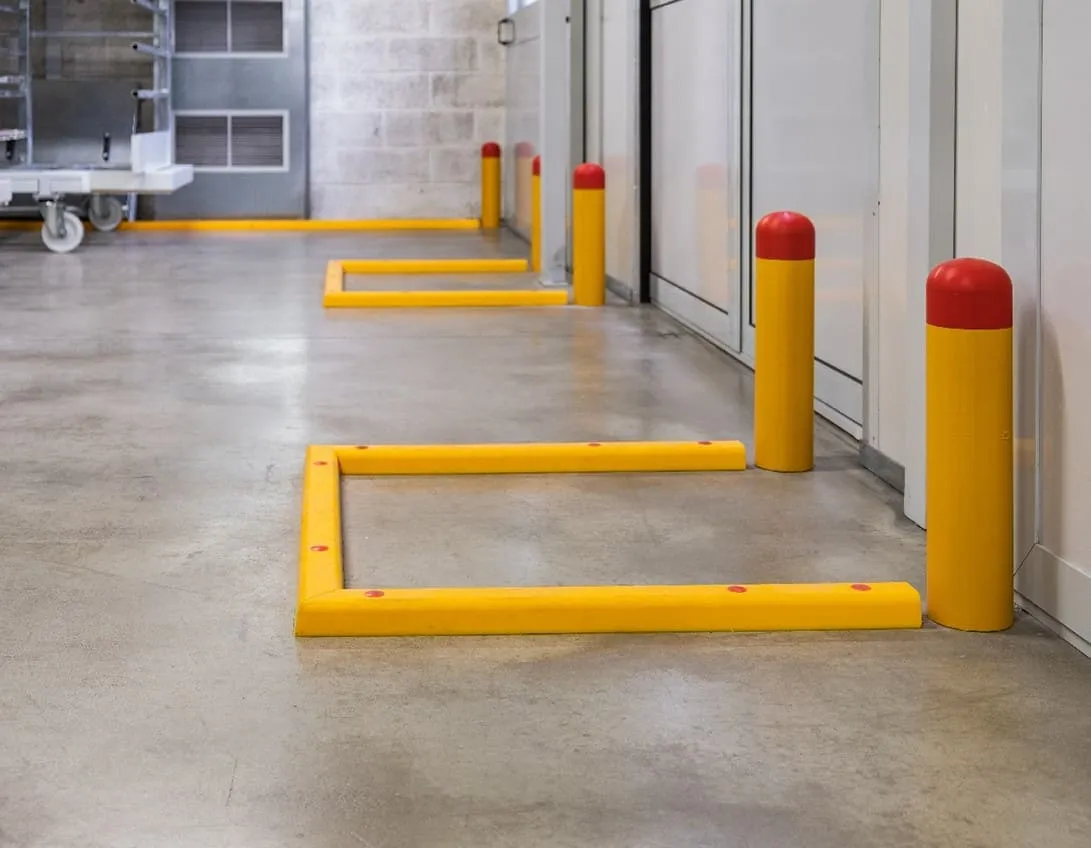
Bollards
For controlling where vehicles can go and keeping them away from doorways, pedestrians and equipment. A bollard makes the boundary physical instead of painted.
-
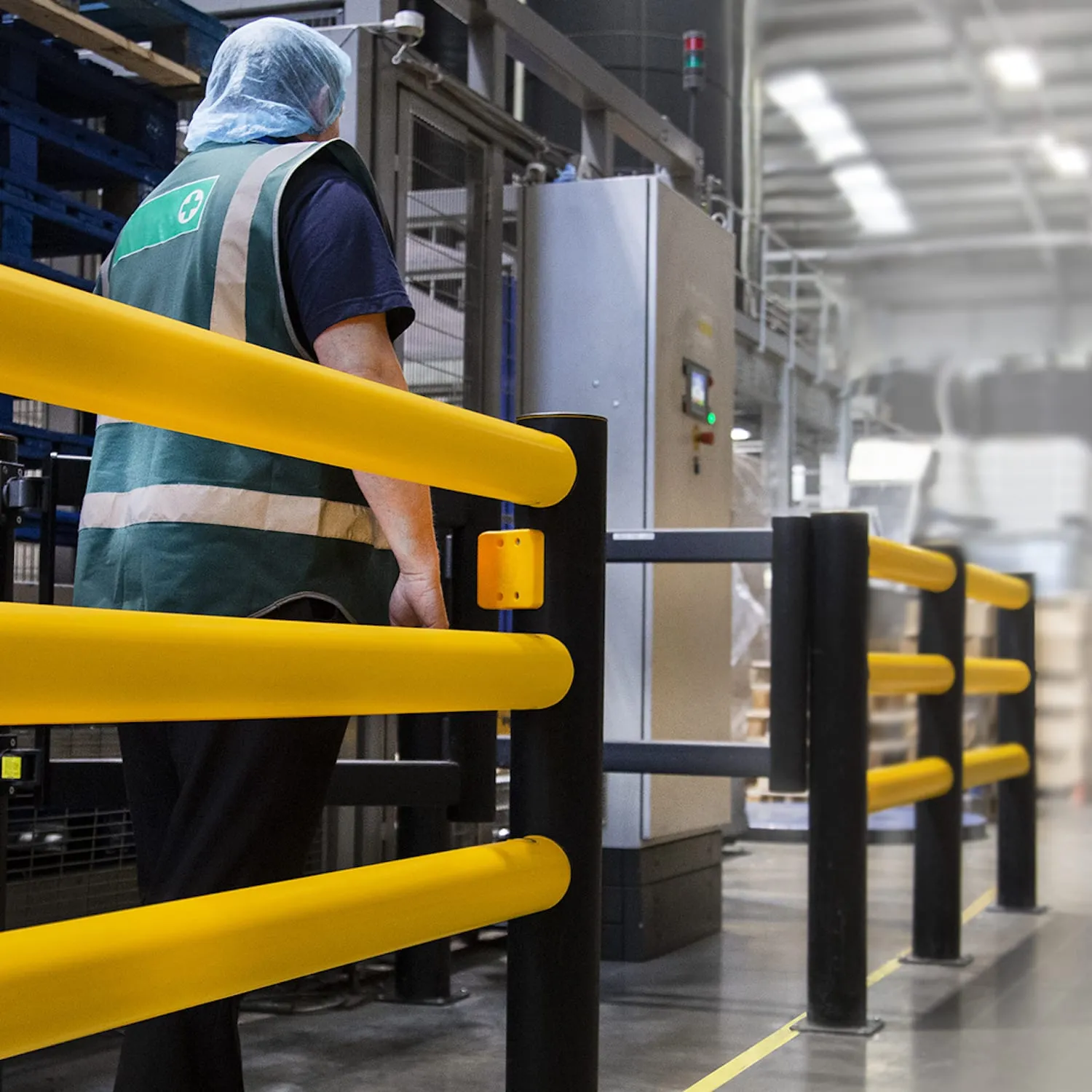
Safety barriers
Guard rails that separate people from vehicles and guide the traffic through the building, which is what turns a shared floor into two zones that do not overlap.
-
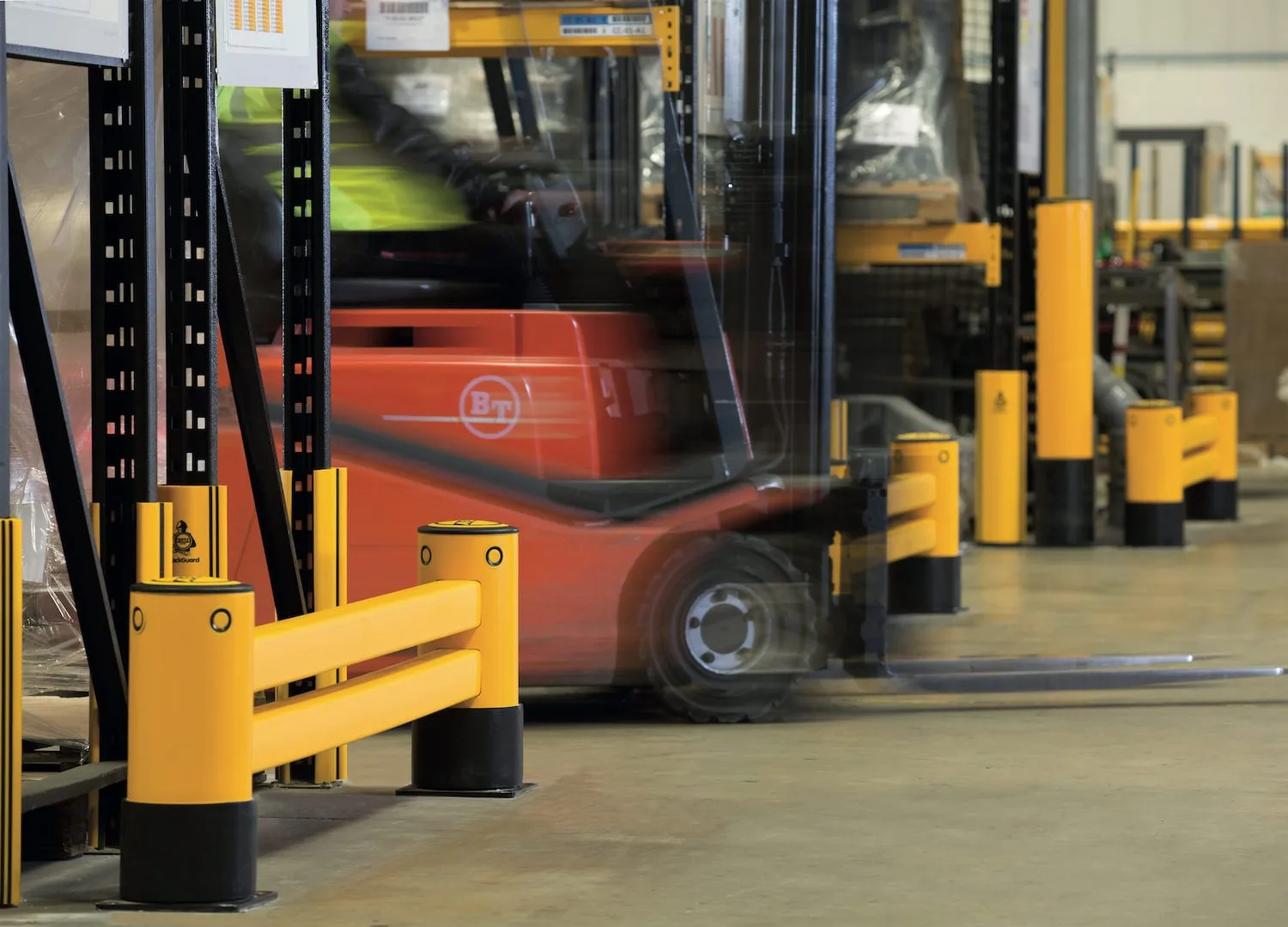
Column protectors
Structural columns take impacts they were never designed for. A protector absorbs the collision so the damage stays in a part you can unbolt rather than in the frame of the building.
-
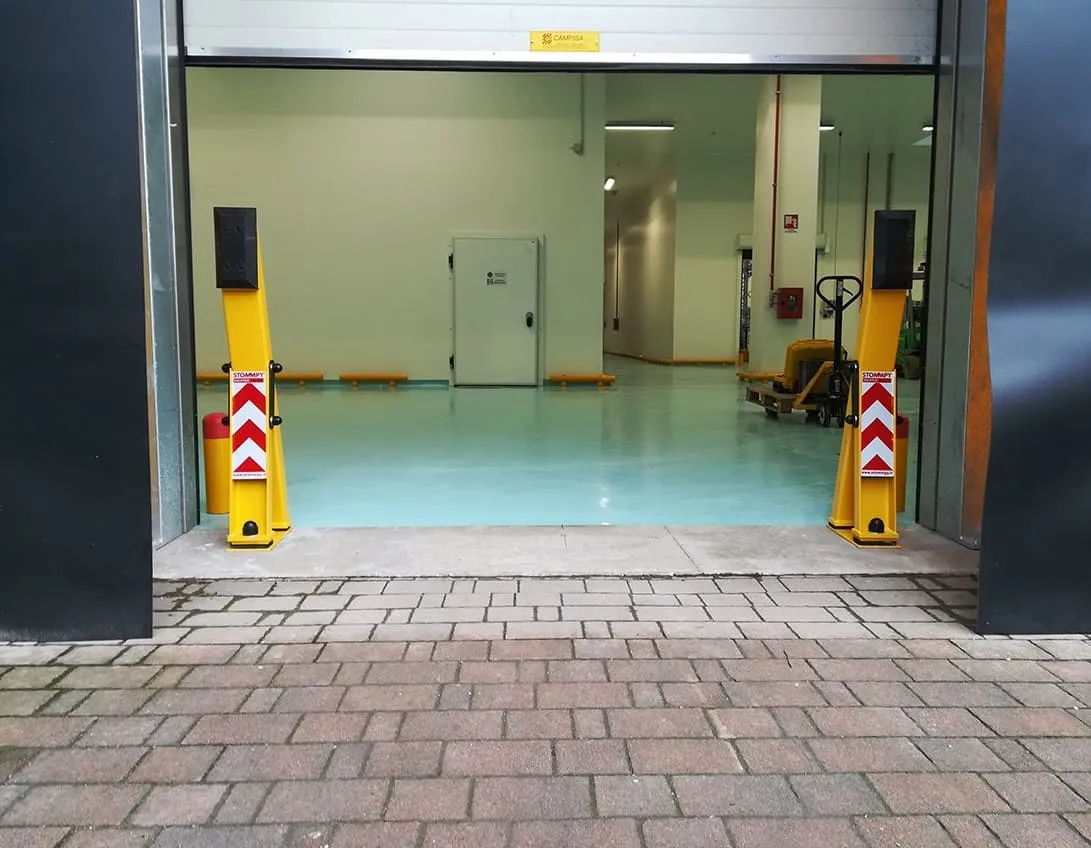
Loading dock protection
The dock is where a reversing trailer meets the building, and the building loses. Dock protection takes the impact away from the wall, the door frame and the vehicle.
-
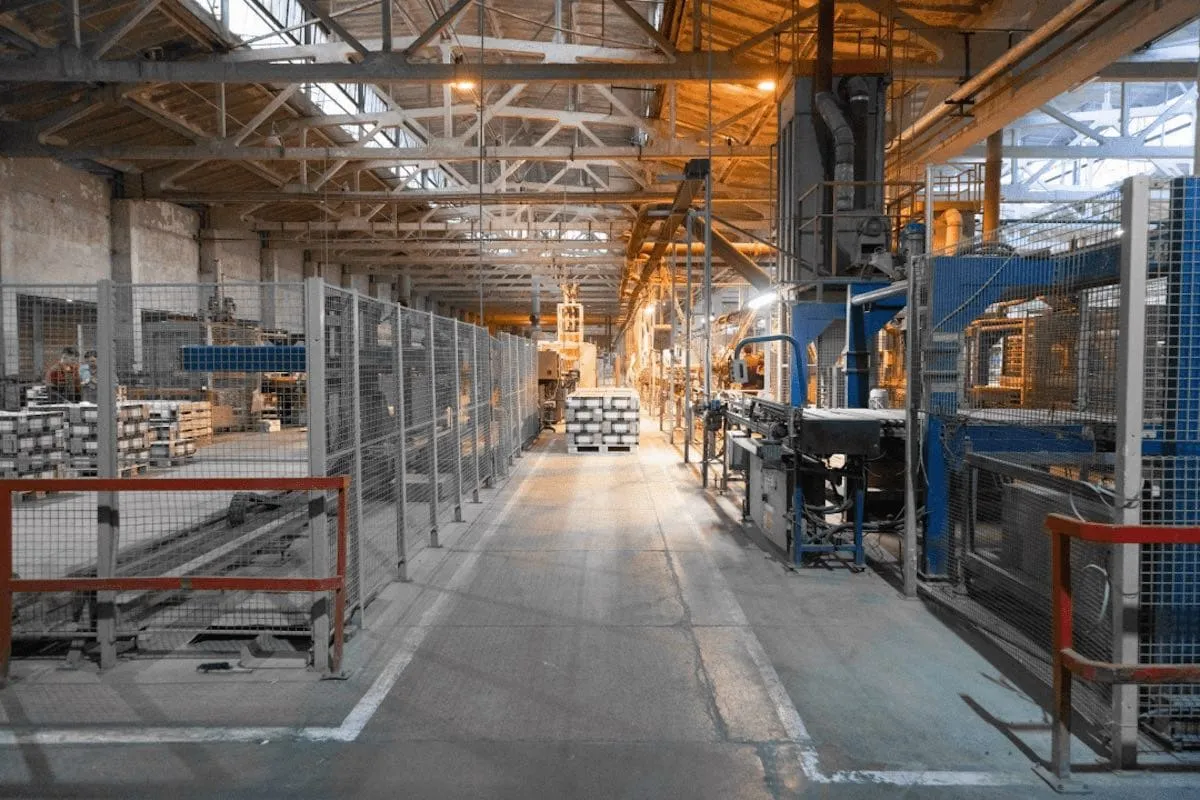
Safety fencing and mesh partitions
Fencing that keeps people out of a machine's working area or out of a zone entirely, which is both a guarding requirement and the simplest way to separate a process from the traffic around it.


What separates a good protection from a cheap one
-
Certified to a standard
Quality protections are tested against recognised standards and approved by the bodies that run them. Ask for the certification and the conditions it was tested under, on anything you are quoted for including ours.
-
Built to take the hit
Industrial environments are hard on equipment. A protection has to absorb a real impact without failing, and the cheap version saves money until the first time it is needed.
-
Designed for the operation
The best protection is the one that gets installed and then stays where it is: easy to fit, out of the way of the work, and visible enough that drivers see it before they touch it.

Protecting the building it is actually in
Which protections a site needs depends on its layout, its traffic and the specific things that keep getting hit, which is why the survey starts on the floor rather than in a catalogue. The dents tell you more than the drawings.
Rejuva identifies the vulnerable points, specifies what should go where, and installs it. Where the racking itself has already been damaged, the inspection and repair work sits with the racking cluster rather than here, and the two are usually done together.
Related services
Projects rarely stop at one discipline. These are the services most often planned alongside this one.

Have a project in mind?
Describe what needs to happen in the building and we will come back with a proposed approach, the specialist who would carry it out and a budget you can work with.